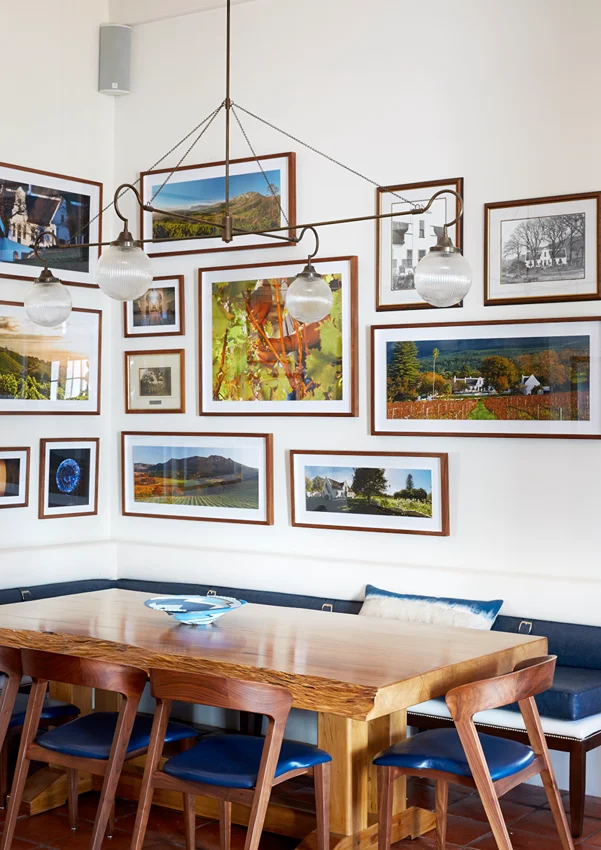
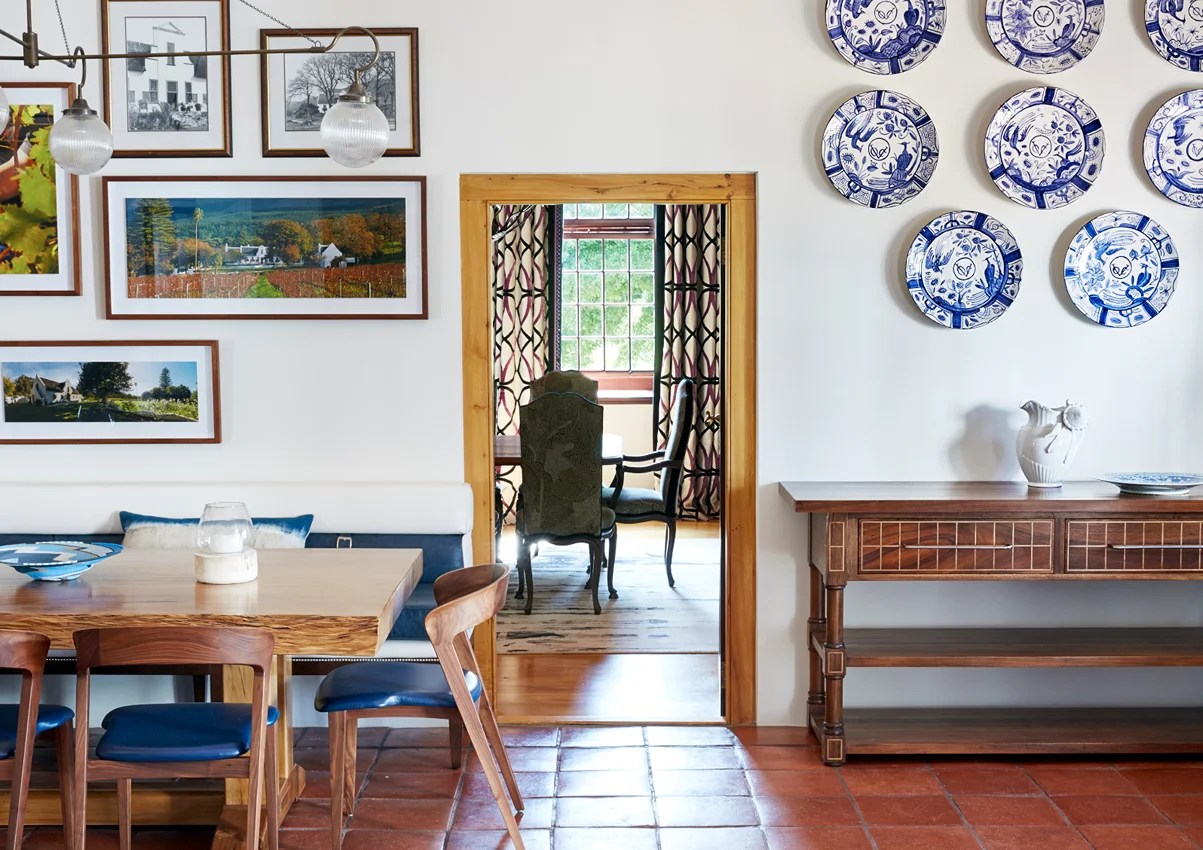
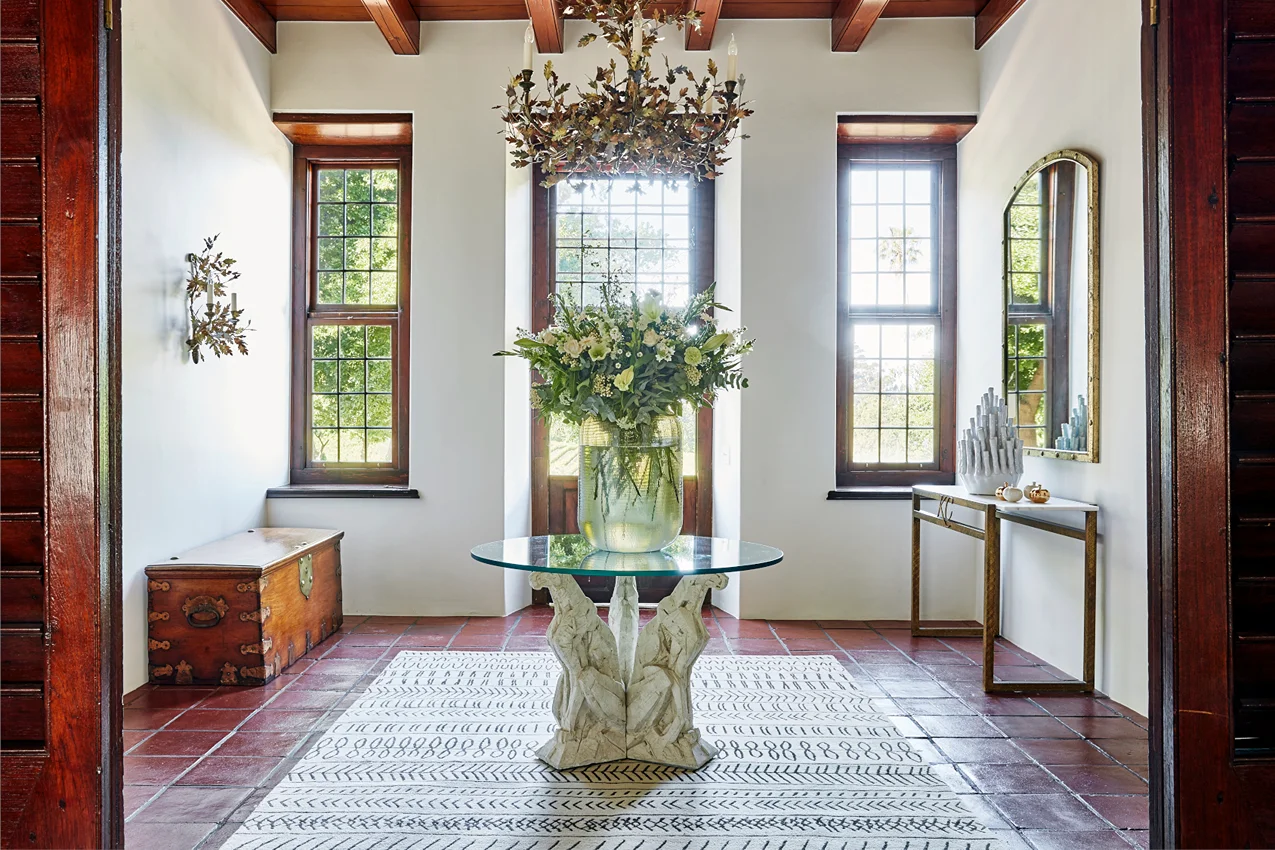
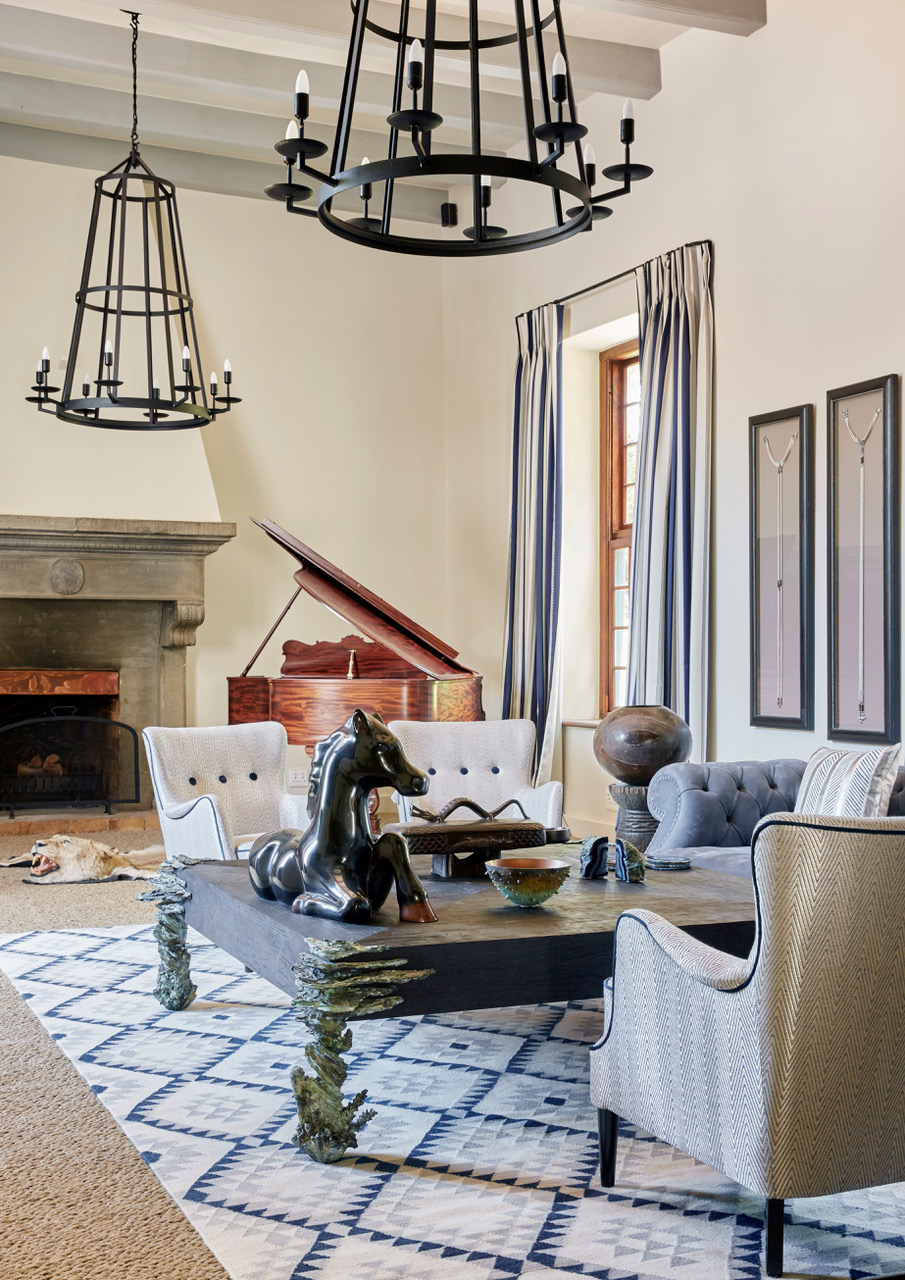
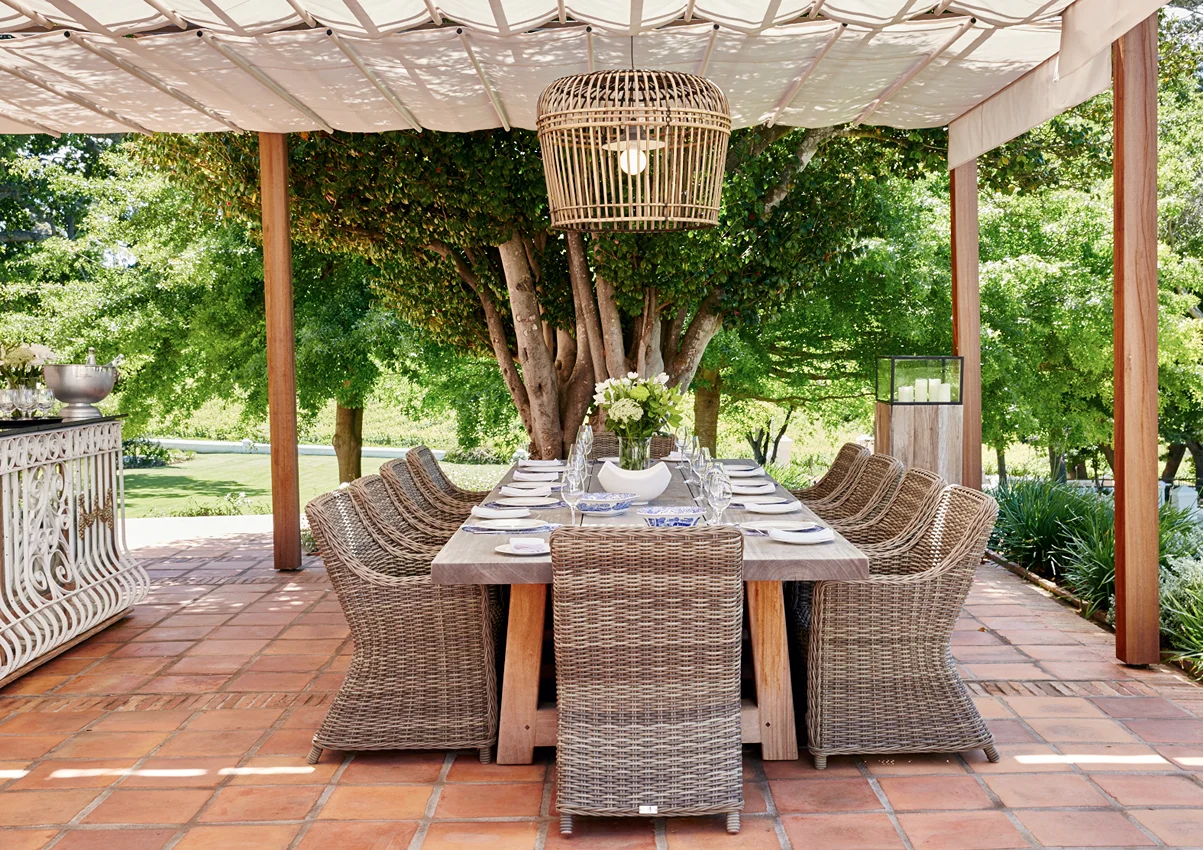
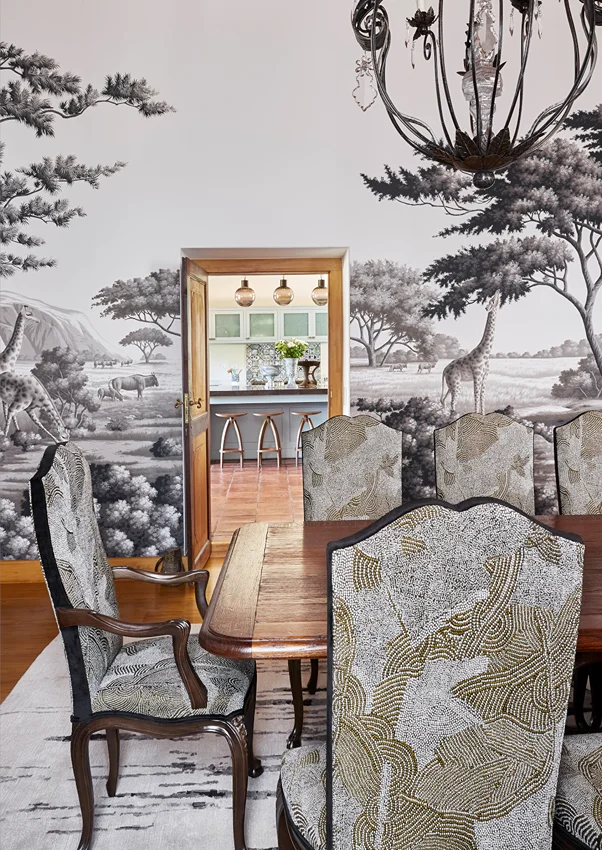
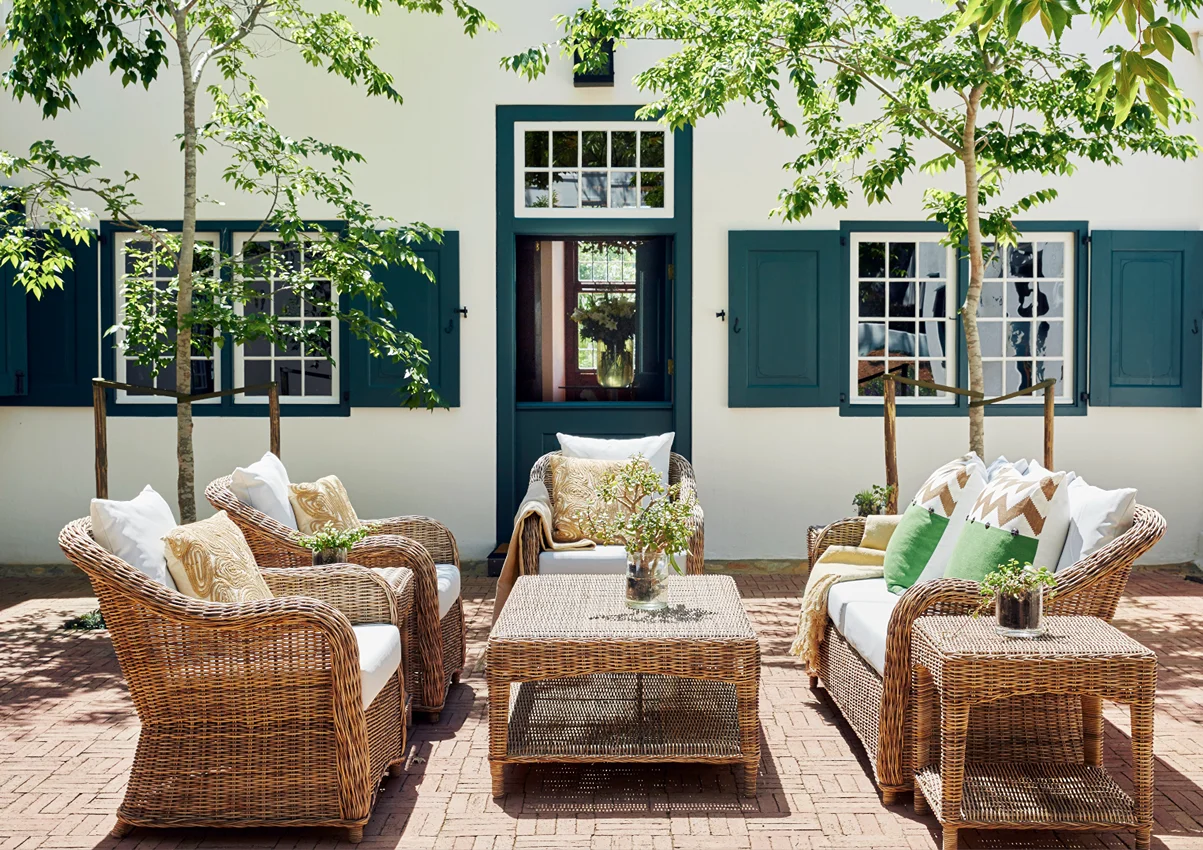
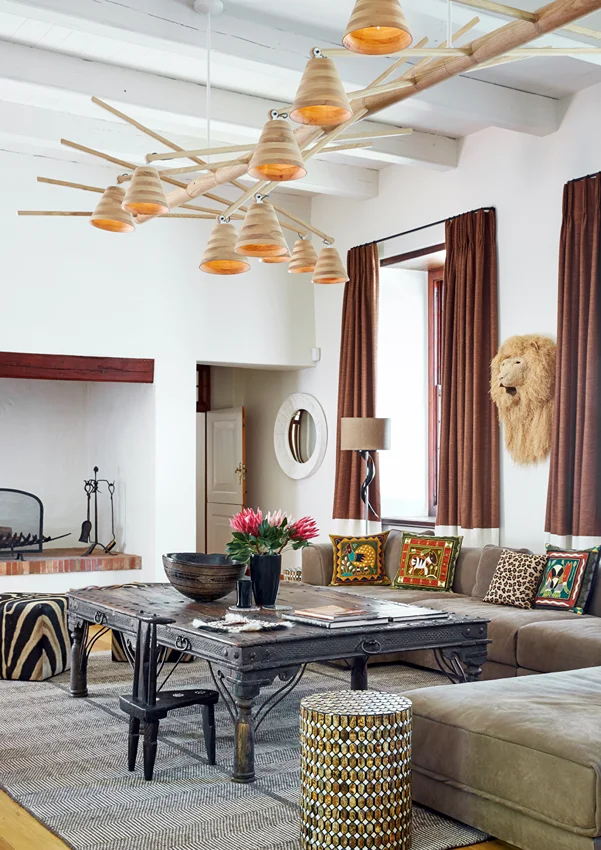
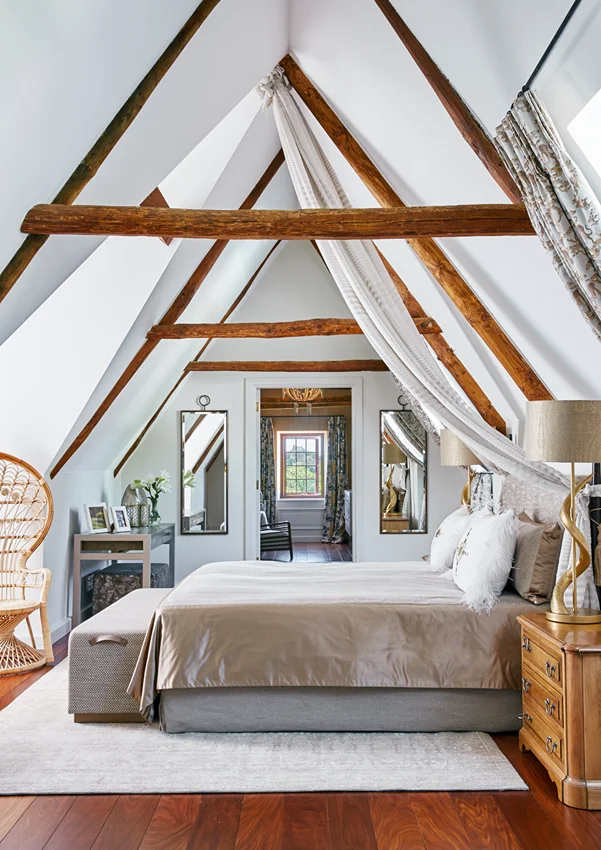
Klein Constantia is a listed Cape Dutch house on a historic estate in Cape Town, so the gables, the proportions and the silhouette were fixed, and the schedule was tight. I worked with what the house already carries, Dutch, Malay and African influences that merged over three centuries, and brought it into the present with furniture, materials and the paintings of Omar Ba, an artist of Senegalese origin who lives in Geneva.
Location
Constantia, Cape Town, South Africa
Type
Residential, Heritage Estate
Scope
Interiors of a listed Cape Dutch homestead.
Photography
Greg Cox
The brief was, on paper, a simple one: honour the Cape Dutch. In practice it was the hardest kind of brief, the kind with no room for invention, because everything already exists and much of it is protected. The estate stands on heritage-listed ground; its gables, its proportions, its very silhouette were not mine to alter. Add a tight timeline and a building with a public, commercial life as well as a private one, and the real challenge was never aesthetic. It was negotiating with a place that has more authority than the architect standing in front of it.
Yet Cape Dutch architecture is less settled than it looks. Beneath the whitewashed gables and the thatch lies a language built from collision: Dutch, Malay and African influences absorbed into a single vocabulary over three centuries. Treated with too much reverence, that history turns into a costume. My founding idea was the opposite of reverence: to let the original collision happen again, on its own terms, for the twenty-first century. Not a restoration that freezes the house in one imagined moment, but a continuation of the instinct that built it: taking what arrives from elsewhere and making it belong.
The paintings of Omar Ba, an artist of Senegalese origin based in Geneva, became the clearest expression of that idea. Hung in rooms governed by heritage constraints, his work carries the same tension the building was made from: Africa read through a European frame, and back again. It was never an ornamental choice. It was the argument of the whole project, made visible in a single room.
What I am proudest of is a kind of accuracy: the sense, walking through the finished house, that nothing was imposed on it; that the identity on display was always latent in the place and only needed permission to surface.