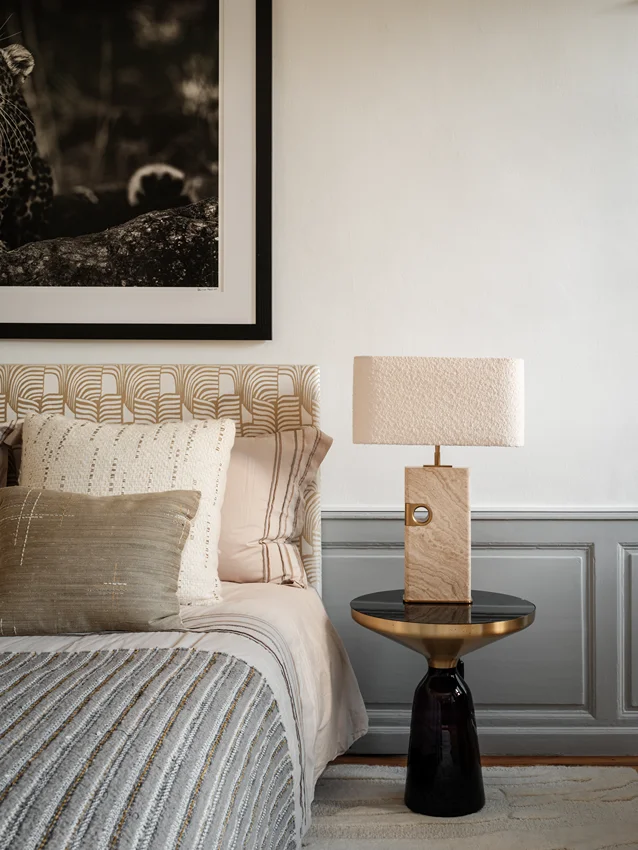
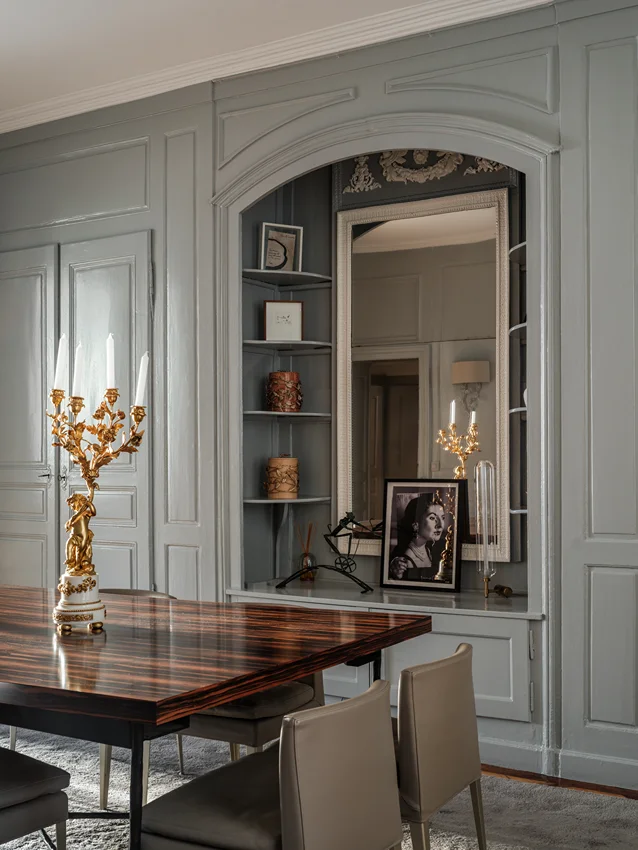
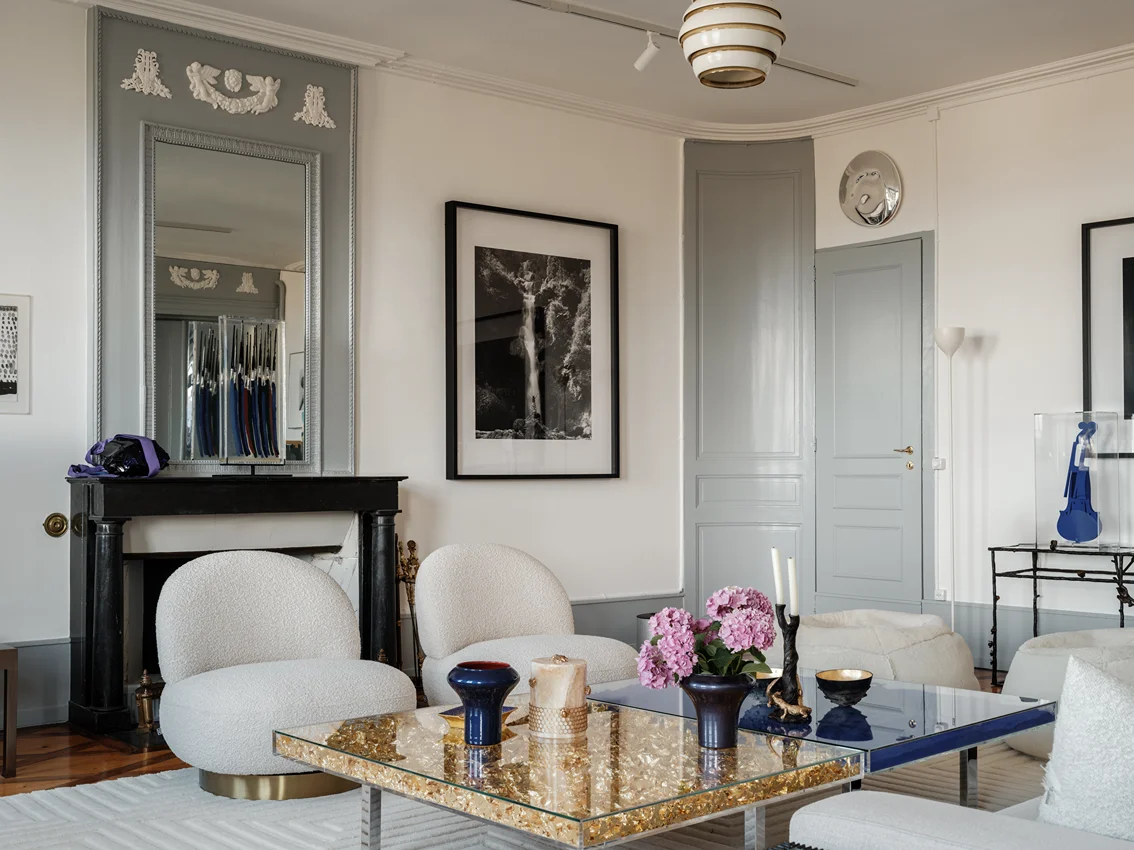
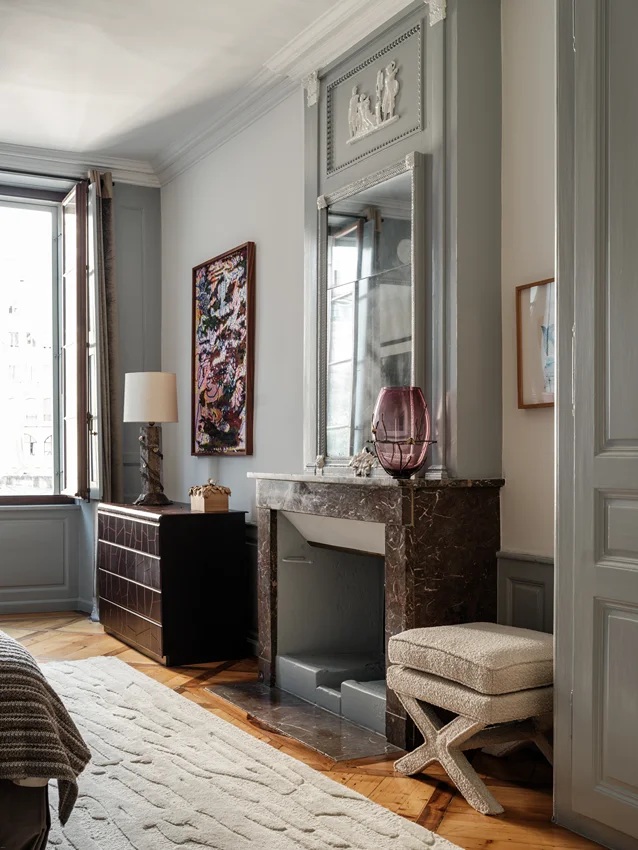
This large apartment is located in a protected building where the walls and the structure cannot be touched. I added what belongs to our time, the furniture, the art and a piano, and left the rest to the house, to its solid wood windows, its rare parquet floors and its panelling with cherubs and scenes from Greek mythology. You are invited, and you say thank you.
Location
Canton of Geneva, Switzerland
Type
Residential, City
Scope
Furniture, art direction and a piano, added without touching the structure.
Photography
Mark Elst
Classical architecture has something to tell us that does not age, and in a place full of history you feel it before you can explain it, as if the walls were speaking close to the ear and reaching for the soul. These houses are protected because they keep our history, and that means no one may touch their structure or their walls, so everything that matters here was already in place when I arrived. The windows are solid wood, the door and window frames are of rare quality, and the parquet floors show the beauty of the wood and the strength of the ground we stand on. In one corridor the floor is humbler, made from the decks of old wooden ships in exotic woods that someone once salvaged. Sober panelling carries cherubs’ heads and scenes from Greek mythology that invite romance, and the cellars were once dungeons. Walking through, you feel yourself part of time, of history and of humanity, and the sky, the cobblestones and the old stones outside open onto something universal.
All that was left to add was the furniture, pieces of our own time that place the space in the present, and then the art, hung without harming the walls, so that a little of us dresses this history we are passing through without leaving too many traces. Some places, like this one, you never really own. You are invited into them, you write yourself into them for a while, and you say thank you. There is a sense of the untouched here, as if time had stopped at the door to let us in.
And the piano, because music has to resonate in places of art and history, and Franz Liszt was once a neighbour.