
The Art of Timeless Interiors
- Published on: September 29, 2026
- Written by: Alexandra de Garidel
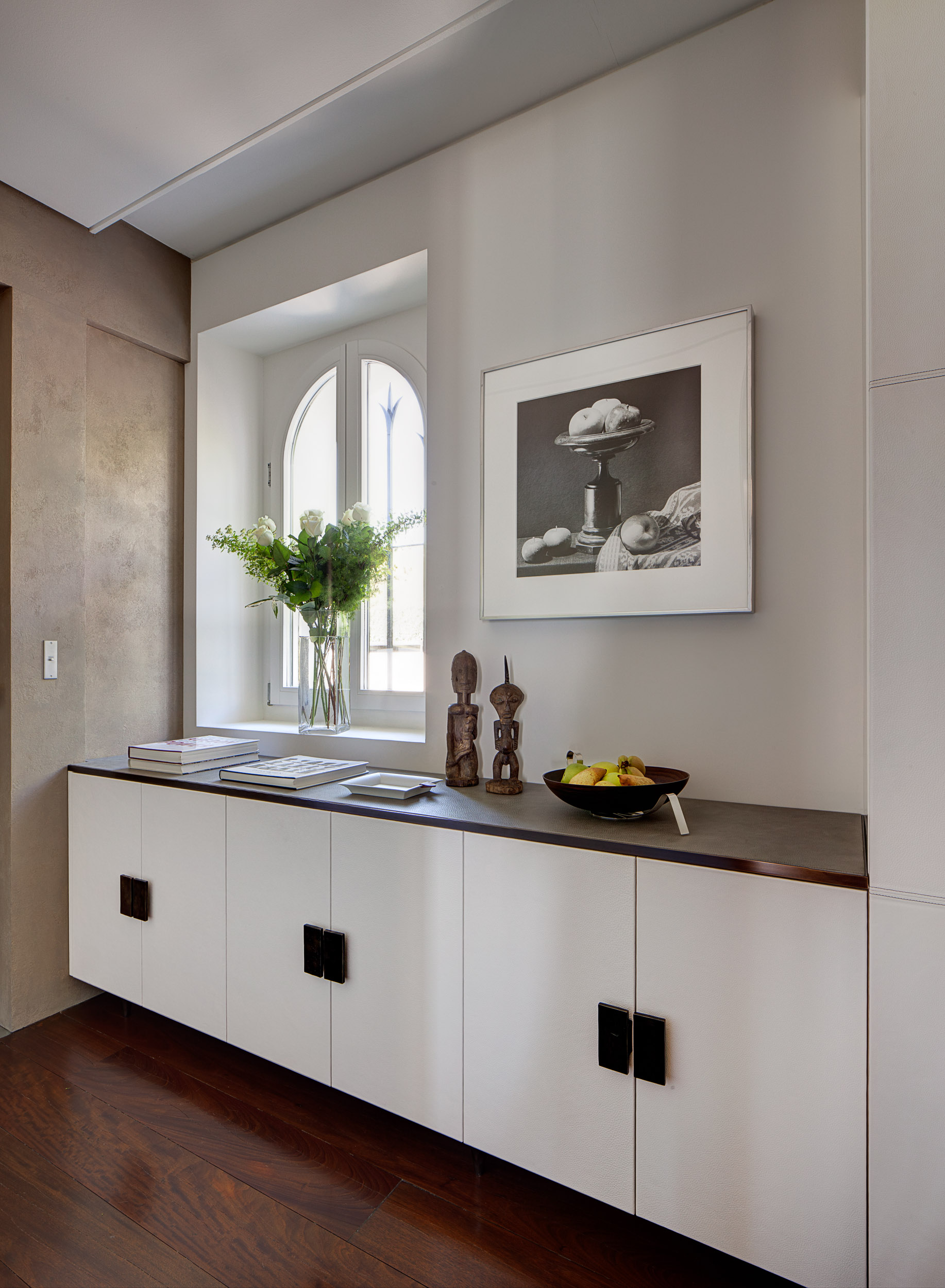
We live in a world that changes quickly.
Design trends appear and disappear. New materials arrive. New colours become fashionable. Social media accelerates everything.
Yet some interiors remain compelling for decades.
What makes them timeless?
I believe the answer is not a particular style. It is the quality of the thinking behind the space.
Timeless does not mean traditional
A timeless interior does not have to look classic.
It can be contemporary, experimental or even unexpected.
What matters is that the space has an identity beyond a passing trend.
A room designed entirely around what is fashionable today can quickly feel dated. A room designed around proportion, materiality, light, art and the personality of its inhabitants has a much greater chance of evolving gracefully.
Timelessness is therefore less about appearance than about intention.
Materials that age with character
Materials play an important role.
Stone, wood, metal, textiles and glass can all change over time. Their surfaces acquire marks, variations and patina.
I find this particularly beautiful.
Perfection is not always the objective. A material that becomes more interesting with use can give an interior a sense of history.
This is one reason I am drawn to craftsmanship and objects that are made with care. They carry a quality that is difficult to reproduce through mass production.
The value of craftsmanship
Craftsmanship creates a connection between the object and the person who made it.
A hand-finished detail, an unusual texture or a carefully constructed piece of furniture can give a room a sense of authenticity.
This interest in craftsmanship has also informed my work with objects and artisans.
There is something powerful about taking an everyday object and reconsidering it through the lens of design. A tray, a glass, a box or a candle holder can become an opportunity to bring beauty into an ordinary ritual.
Luxury, in this sense, is not necessarily about excess.
It can be about attention.
The role of memory
The most personal interiors are rarely created from a single moment.
They accumulate.
A work of art acquired during a journey. A piece of furniture inherited from family. An object discovered unexpectedly. A material associated with a particular place.
These things give a home its emotional dimension.
A designer can create the framework, but the inhabitants ultimately give the space its history.
Designing for the future
When I begin a project, I am not interested only in how it will look when photographed.
I think about how it will be lived in.
Will the space still feel comfortable in five years? Will the materials age beautifully? Can the furniture be rearranged? Can the home accommodate changes in the lives of its inhabitants?
These questions encourage a different approach to design.
Instead of asking, "What is fashionable now?", we can ask, "What will continue to have meaning?"
Beauty that lasts
Timeless design is not about creating something that never changes.
It is about creating something strong enough to change with us.
A successful interior can welcome new objects, new memories and new stages of life without losing its identity.
Perhaps that is the real measure of enduring design.
Not whether a room remains exactly the same, but whether we continue to want to live in it.
That is the kind of beauty I believe is worth creating.
Featured Articles
Klein Constantia: A New Chapter for a Historic House
October 19, 2026
The Bear: Reimagining a Mountain Home
October 19, 2026