
Klein Constantia: A New Chapter for a Historic House
- Published on: October 19, 2026
- Written by: Alexandra de Garidel
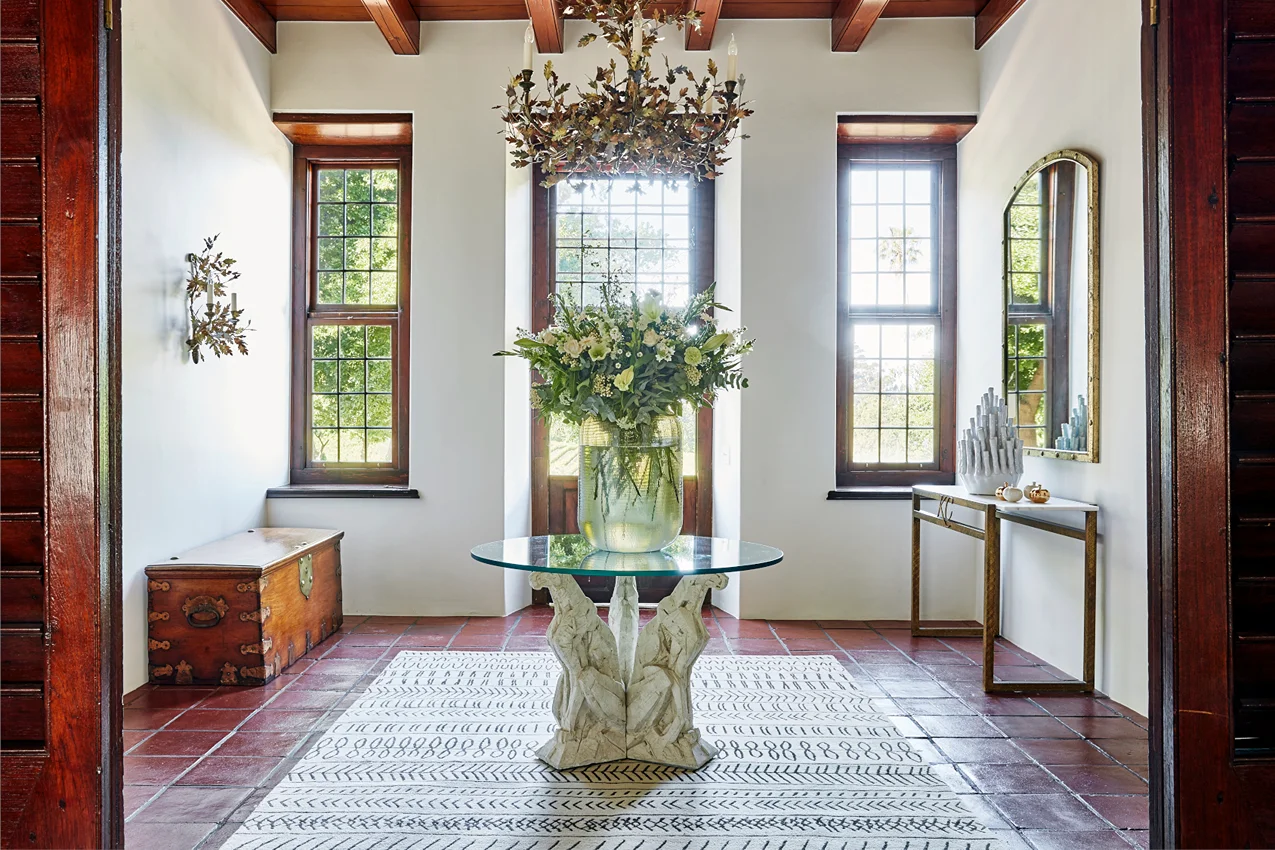
Inside Alexandra de Garidel's approach to a listed Cape Dutch homestead, where architectural heritage and contemporary art create a dialogue across cultures.
Some houses come with a history that cannot, and should not, be rewritten.
At Klein Constantia, on a historic estate in Cape Town, Alexandra de Garidel approached the interiors of a Cape Dutch homestead whose architectural character was already firmly established.
The challenge was not to transform the building into something entirely new, but to discover how contemporary life and art could find their place within it.
The result is a project built around a careful balance between preservation, cultural influences and a modern interpretation of the house's original identity.
Understanding What Already Exists
Every project begins with observation, but working within a listed building demands a particular kind of attention.
At Klein Constantia, the protected architecture determined what could and could not be changed. The proportions of the rooms were fixed, and the existing structure provided the framework for the entire project.
For Alexandra, these limitations were not simply obstacles. They became the starting point for the design.
Instead of imposing a new architectural language, she worked within the character of the homestead, considering how furniture, materials and art could bring a contemporary perspective to its historic rooms.
It is an approach that begins by asking what a building already possesses before deciding what it needs.
A Modern Reading of Cape Dutch Heritage
Cape Dutch architecture is deeply connected to the cultural history of South Africa. Its distinctive architectural language developed through the meeting of different influences over time.
At Klein Constantia, Alexandra approached this heritage through a contemporary lens.
Rather than recreating a period interior, the renovation explores how an old house can remain connected to its origins while accommodating a different way of living.
The architecture provides continuity. The interior choices introduce another chapter.
This relationship between past and present is central to Alexandra's work with historic properties: preserving what gives a building its identity without preventing it from evolving.
Art as a Cultural Conversation
One of the defining elements of the project is the presence of paintings by contemporary artist Omar Ba.
His work brings together African and European references, creating a dialogue that feels particularly meaningful within the Cape Dutch setting.
The relationship is more than visual.
The homestead itself belongs to an architectural tradition shaped by cultural exchange. Placing Ba's paintings within its rooms creates another meeting of histories, perspectives and artistic languages.
The works are not treated as decoration or as isolated objects.
They contribute to the atmosphere of the rooms and the way the historic architecture is experienced today.
Working Within the Limits
In a contemporary building, an interior architect may have considerable freedom to alter spaces. In a listed property, the process is different.
At Klein Constantia, the existing proportions had to remain.
This made the relationship between the architecture and its contents especially important. Decisions about furniture, art and the overall composition of the rooms carried the responsibility of creating a new atmosphere without relying on structural transformation.
For Alexandra, working with a historic building means understanding what must remain, what can evolve and how the two can coexist.
The objective is not to erase the past, nor to preserve a house as though nobody lives there.
It is to allow its history to continue.
A House Between Cultures and Generations
What makes Klein Constantia distinctive is the relationship between its different layers.
There is the historic Cape Dutch architecture, the contemporary perspective of the interiors, and the artistic language of Omar Ba.
Each brings its own identity, yet none needs to dominate the others.
Together, they create a house that acknowledges its history while remaining open to contemporary life.
For Alexandra de Garidel, this is the value of working with places that already have character: the most interesting design decisions often come from listening to what is there.
Klein Constantia demonstrates that a historic house does not need to choose between its past and its future.
It can hold both.
Klein Constantia, Cape Town, South Africa
Project scope: Renovation of a listed Cape Dutch homestead, developed around a contemporary interpretation of the historic architectural style.
Photography: Greg Cox
Featured Articles
Klein Constantia: A New Chapter for a Historic House
October 19, 2026
The Bear: Reimagining a Mountain Home
October 19, 2026